Morocco travel FAQ: what to know before you go
Visas, weather, money, dress, Ramadan and getting from the airport, answered by the team at Daba Village.
The questions our guests ask before coming to Morocco
These are the questions we are asked most often by WhatsApp and email, gathered in one place: first the essentials for travelling to Morocco, then what to expect at Daba Village, our yoga retreats and our spiritual retreats.
Planning a trip to Morocco
Visas, the best time to come, flights and the practical bits that are worth sorting before you pack.
Do I need a visa to visit Morocco?
Citizens of the UK, the EU, the United States, Canada, Australia and many other countries can visit Morocco without a visa for up to 90 days. Some nationalities need a visa or an electronic visa in advance, so check with the Moroccan consulate or your government’s travel advice before you book.
How long does my passport need to be valid?
Your passport must be valid for the whole of your stay. Many airlines like to see at least six months left on it, so that is the safe rule to follow.
When is the best time to visit Marrakech?
Spring (March to May) and autumn (late September to November) are the most comfortable, with warm days and cool evenings. Winter is sunny but the nights are cold, and July and August are very hot. April, May and October are our busiest months for a reason.
What is the weather like in Marrakech through the year?
- Spring, March to May: warm days of around 23 to 29°C, with fresh mornings and evenings.
- Summer, June to August: hot and dry, often 35 to 40°C or more in July and August.
- Autumn, September to November: warm days, from around 32°C in September down to the low 20s by November.
- Winter, December to February: sunny days of around 18 to 20°C, cold nights that can drop to 5°C or below, and snow on the high Atlas.
How long is the flight to Marrakech?
Around three and a half hours from London, about three hours from Paris and under two hours from Madrid. Marrakech Menara Airport (RAK) has direct flights from most major European cities.
Is Morocco in Africa or the Middle East?
Morocco is in North Africa, in the north-west corner of the continent, with coastlines on the Atlantic and the Mediterranean. At the Strait of Gibraltar it is only about 14 km from Spain, which is why it is such a short hop from Europe.
What language do people speak in Morocco?
Moroccan Arabic (Darija) and Amazigh (Berber) are the everyday languages, French is widely used in business and on signs, and English is common in Marrakech’s hotels, restaurants and shops. Our team speaks English, French, Spanish, Arabic and German.
What time zone is Morocco in?
Morocco uses GMT+1 for most of the year and switches back to GMT for the month of Ramadan, so check that your phone has updated if you travel then.
What plugs and voltage does Morocco use?
Two-pin European plugs (types C and E) at 220 volts. Visitors from the UK, Ireland and North America will need an adapter.
Will my phone work in Morocco?
Most foreign phones roam in Morocco, but data roaming can be expensive. A local SIM from Maroc Telecom, Orange or inwi, sold at the airport and in town, or a travel eSIM bought before you leave, usually works out cheaper. Wi-Fi is free at the riad.
Can I bring a drone?
Leave it at home. Drones are not allowed into Morocco without prior authorisation, and they are usually held at customs until you leave.
Money, cards and tipping
How to pay, how much cash to carry, and what to leave as a tip.
What currency does Morocco use?
The Moroccan dirham (MAD). It is a closed currency, so you generally cannot buy it before you travel. Change money at the airport or in town, or take cash from an ATM when you land.
Can I pay by card in Morocco?
Hotels, larger restaurants and many shops in Marrakech take cards, but cash still rules in the souks, in taxis and for tips. Keep some small notes and coins with you, and let your bank know you are travelling.
How much should I tip?
Tipping is part of daily life. Around 10% is normal in restaurants, and 10 to 20 dirhams is appreciated by porters, drivers and anyone who helps you. For a full-day guide, 100 to 200 dirhams is a fair tip.
Should I haggle in the souks?
Yes, bargaining is expected in the souks and is part of the fun. Decide what something is worth to you, start well below the first price and keep it friendly. Shops with fixed prices will tell you.
Dress, customs and Ramadan
Morocco is relaxed and welcoming, and a little local knowledge goes a long way.
What should I wear in Morocco?
There is no dress code for visitors, but loose clothes that cover the shoulders and knees are respectful in the medina, in villages and at religious sites, and they are cooler in the sun anyway. Swimwear is fine by the riad pool. From November to March, bring warm layers for the evenings.
Can I drink alcohol in Morocco?
Yes. Alcohol is legal and served in licensed hotels, restaurants and bars, and sold in some supermarkets, but it is not part of everyday life and drinking in public is frowned upon. You will not find it in most of the medina.
Is it a good idea to travel during Ramadan?
It can be a lovely time to visit. Many Moroccans fast from sunrise to sunset, so some cafés close during the day and the pace is slower, then the streets come alive after sunset for iftar. Hotels and tourist restaurants stay open, and visitors simply avoid eating, drinking and smoking in public during the day as a courtesy. In 2027, Ramadan is expected to run from around 8 February to 9 March, depending on the sighting of the moon.
Can non-Muslims visit mosques in Morocco?
Most mosques are open to Muslims only. The Hassan II Mosque in Casablanca is the well-known exception, with guided tours. In Marrakech you can admire the Koutoubia from outside and visit historic sites such as the Ben Youssef Madrasa.
Can I take photos of people?
Always ask first. Many people are happy to be photographed, some will expect a small tip and some will say no, especially women and older people. Performers in Jemaa el-Fnaa square usually ask for a few dirhams.
Health and safety
Straight answers on safety, water, vaccinations and insurance.
Is Morocco safe for tourists?
Morocco is one of the most visited countries in Africa and most trips pass without any trouble. The usual city sense applies: watch for pickpockets in crowded places, use official taxis, and politely ignore anyone who offers to guide you through the medina unasked. Check your government’s latest travel advice before you go.
Is Morocco safe for women travelling alone?
Many women travel in Morocco on their own and have a wonderful time. Unwanted comments in busy streets can happen; dressing modestly and walking with purpose tends to reduce them. Outside the city, at the riad, it is calm and quiet, and we host women’s wellness retreats and sisters’ gatherings.
Can I drink the tap water in Morocco?
Tap water in Marrakech is treated, but most visitors stick to bottled or filtered water to avoid an upset stomach. Bottled water is cheap and sold everywhere.
Do I need vaccinations or malaria tablets for Morocco?
No vaccinations are required to enter Morocco from Europe or North America, and there is no malaria: the World Health Organization certified Morocco malaria-free in 2010. It is still worth checking that your routine vaccinations are up to date and asking your doctor or a travel clinic for advice.
Do I need travel insurance?
Yes. Make sure it covers medical treatment and repatriation, plus any activities you plan, such as horse riding, quad biking or hiking in the Atlas.
Getting to Daba Village
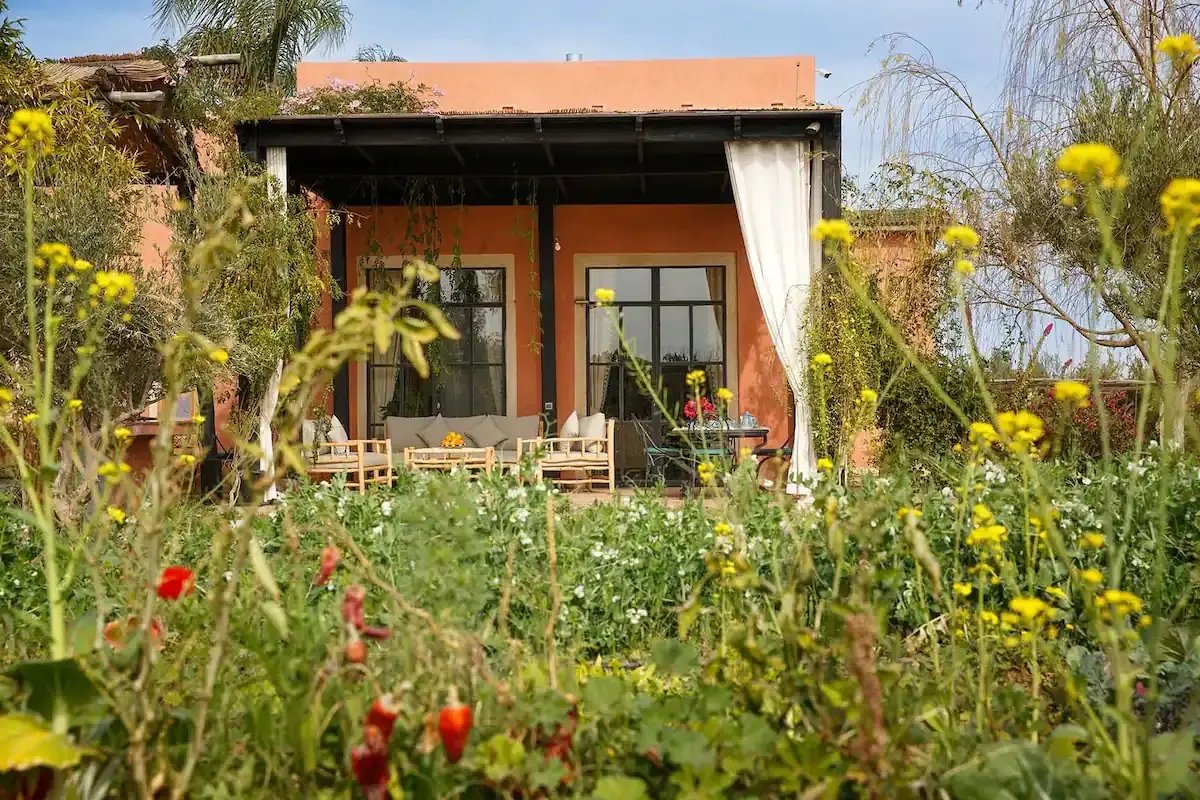
We are on Route Aurika in Tameslouht, about 10 km outside Marrakech.
How far is Daba Village from Marrakech airport?
About 25 minutes by car from Marrakech Menara Airport (RAK), depending on traffic.
How do I get from the airport to the riad?
The easiest way is our private chauffeur, who meets you in arrivals. Book it with your stay or message us your flight details. Ride-hailing apps are limited in Morocco and taxis outside the city run on agreed fares, so a pre-booked transfer saves the negotiation.
How far is the medina and Jemaa el-Fnaa?
Around 25 to 30 minutes by car. We can arrange a driver for the day or a guided medina tour; see our excursions.
Do I need to hire a car?
Not to stay with us. A car is useful if you are touring the country, but driving in Marrakech traffic takes nerve, and our chauffeur service covers airport runs, the city and day trips.
Staying at Daba Village
What to expect from a stay at the riad.
What is there to do at Daba Village?
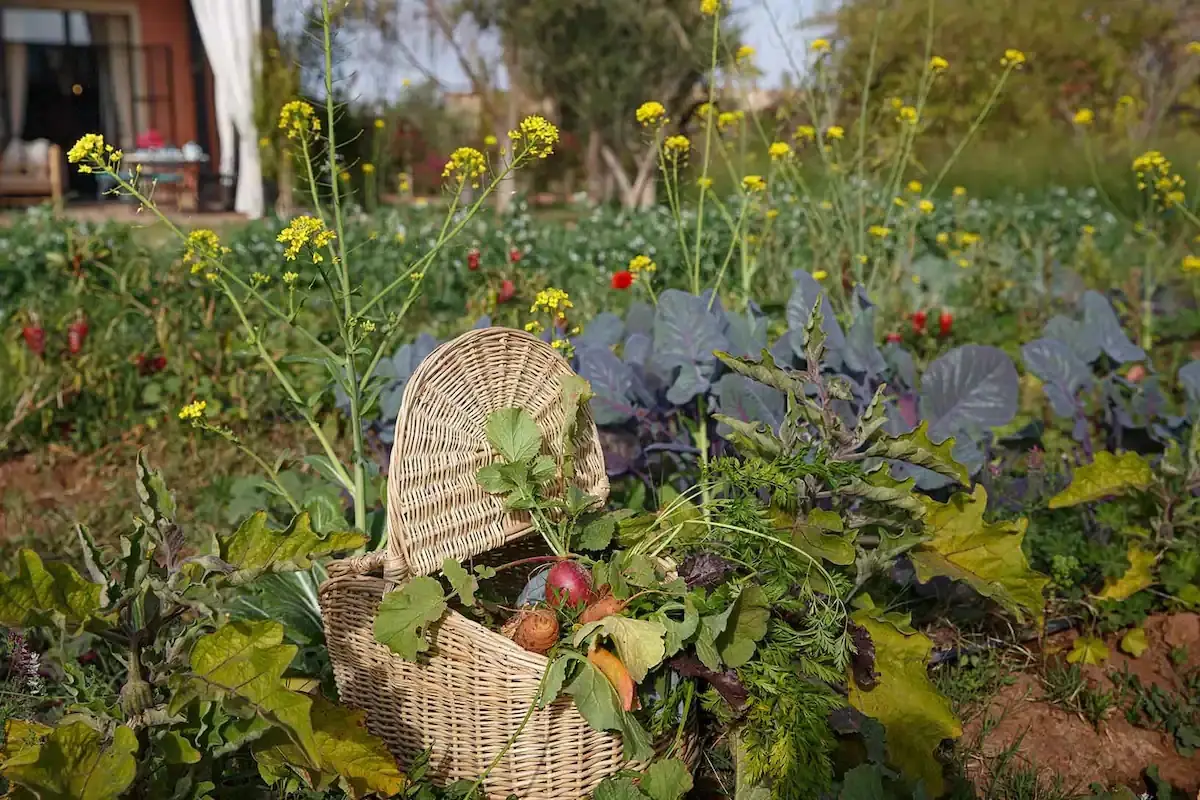
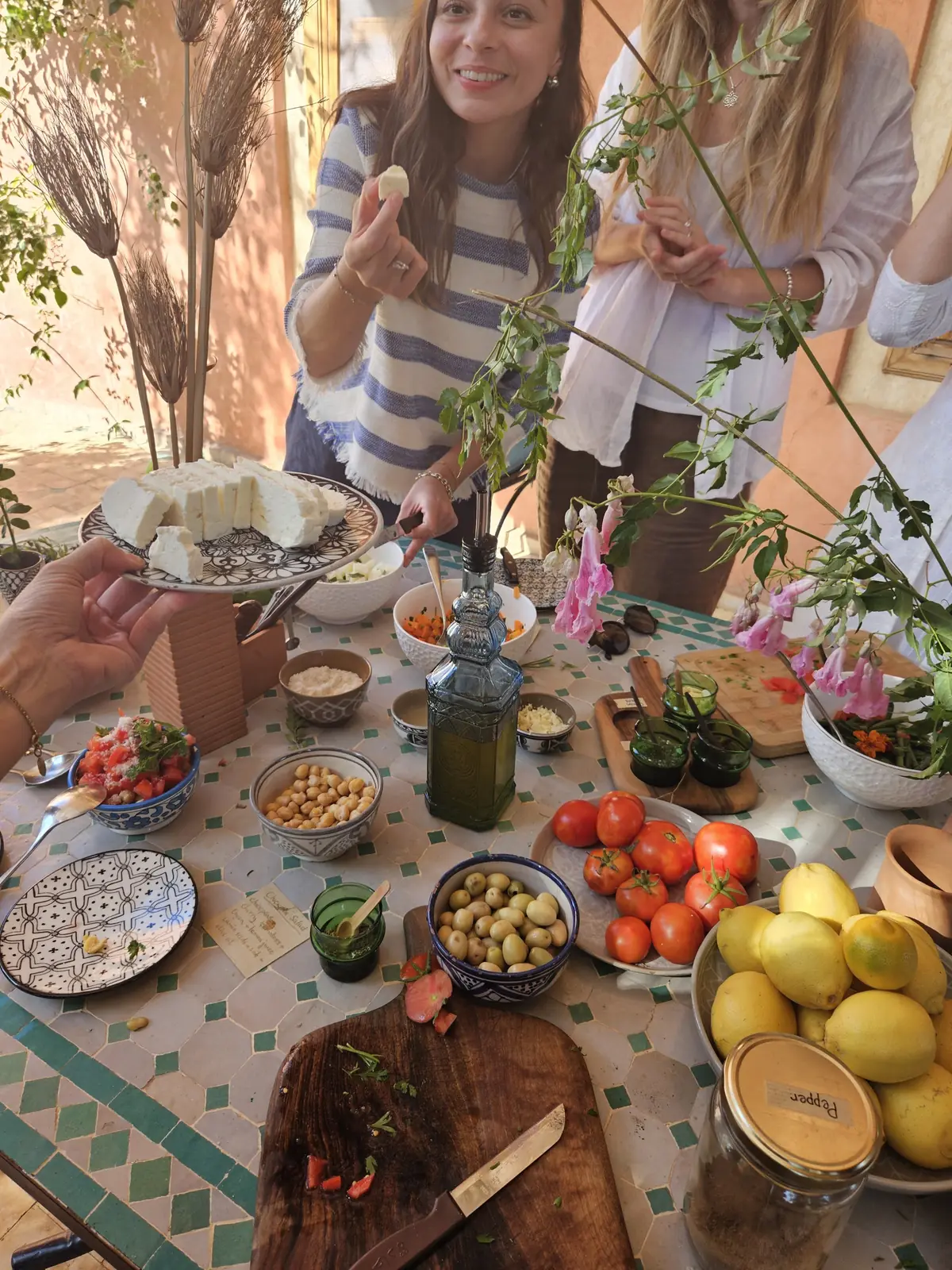
Plenty, or nothing at all. There are gardens and an organic farm, the pool, a traditional hammam and spa, yoga, our own horse club and cooking classes, and our excursions take you to the Atlas, the Agafay desert and the medina.
Can you cater for special diets?
Yes. Our kitchen cooks from the farm and garden and caters for vegetarian, vegan and gluten-free guests. Let us know about any allergies when you book.
Is there Wi-Fi and air conditioning?
Yes. Wi-Fi is free and the suites have air conditioning.
Can we book the whole riad?
Yes. The whole property can be hired for retreats, weddings, family gatherings, offsites and shoots. See venue hire and partnerships.
Yoga and wellness retreats
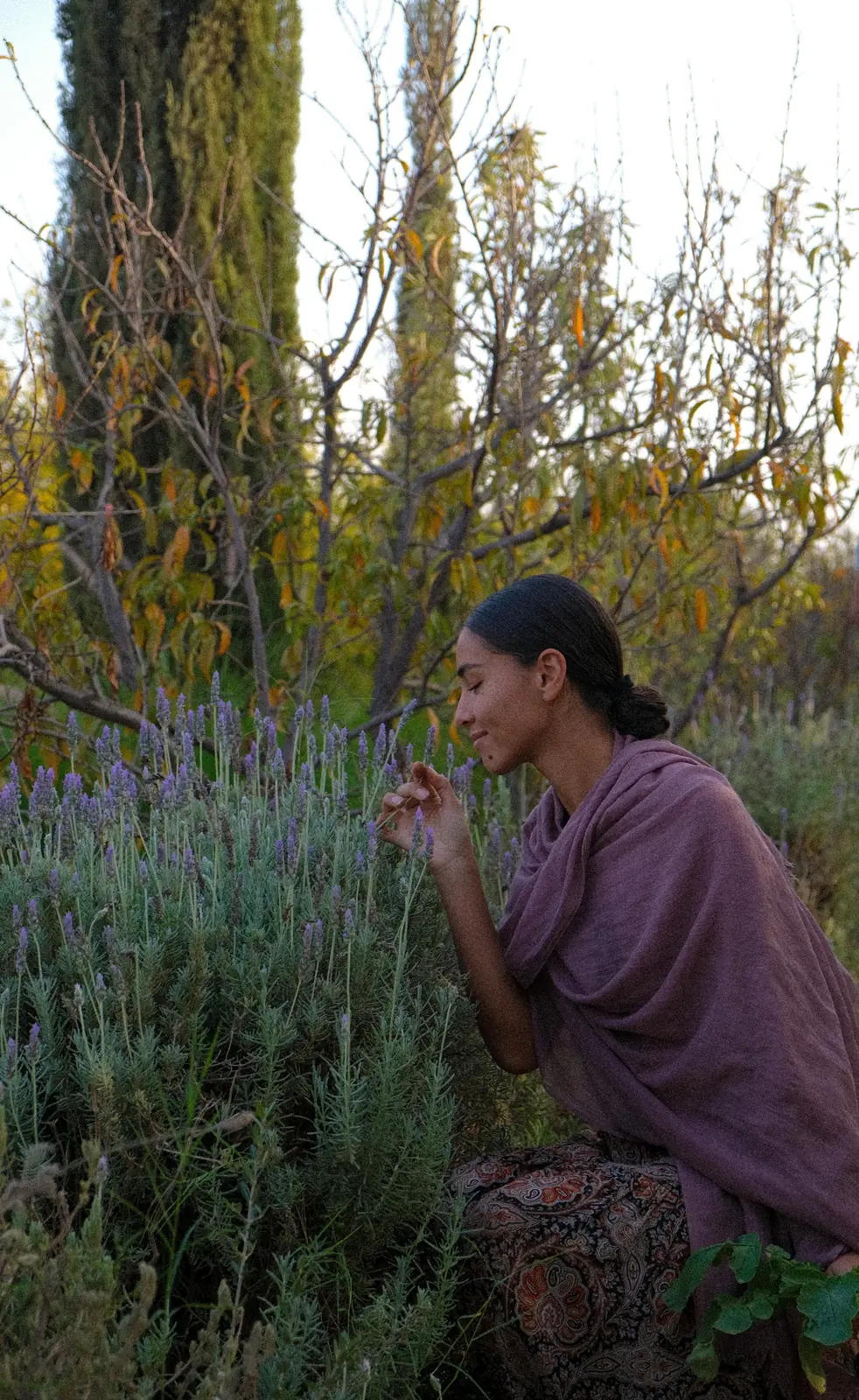
Practical answers for anyone thinking about a yoga retreat in Morocco.
Do I need experience to join a yoga retreat in Morocco?
No. Our retreat sessions are open to every level, from complete beginners to experienced practitioners.
How much does a yoga retreat at Daba Village cost?
Group rates start at €169 per person, per night in low season, €195 in April, May and October and €235 over the festive period, with full board included. See all rates and what they include.
Can I come on a retreat on my own?
Our retreats are booked by groups, usually through a teacher or organiser. If you are travelling alone, message us your dates and we will tell you about any retreats running while you are here.
What should I pack for a yoga retreat in Morocco?
Comfortable clothes for practice, a warm layer for early mornings and evenings (especially from November to March), a swimsuit, sun cream, a hat and modest clothes for trips into the medina. Mats and props are provided.
Spiritual retreats
About our Islamic spiritual retreats, Find Your Sakinah.
What is an Islamic spiritual retreat?
Time set aside for worship, reflection and Tazkiyah, the purification of the heart. Our retreats combine guided dhikr, Fajr reflections and workshops with time in nature, halal meals and the company of like-minded people.
Is the food halal at Daba Village?
Yes. Meals are halal and cooked from scratch, much of it with produce from our own farm.
Are there women-only spaces?
Yes. Sacred gatherings for sisters take place in a private space with a ladies-only pool.
Can we get married at Daba Village?
Yes. We host exclusive-use riad weddings with a Moroccan welcome, the Amariya, a royal feast and live Gnaoua music. See our wedding venue page.
Last reviewed November 2026. Entry rules can change, so check official travel advice before you book.
Plan the rest of your trip
Still have a question?
Message us on WhatsApp or by email and a member of the team will get back to you.